
 Tiếng Việt
Acne is a common problem that almost everyone experiences. Let’s explore the various aspects related to this issue with Enbi Bao Bao Nail & Spa to better understand our skin, such as: “Where does acne usually appear?”, “Why does acne occur?”, “What are the common types of acne?”, and “How to care for acne-prone skin” so you can care for your skin effectively and appropriately!
Where do acne usually appear?

Before understanding why acne occurs, we need to know where acne commonly appears. Acne can appear in many places on the body, but the most common locations are:
- Face: This is the most common location for acne to appear. Facial acne usually appears on the forehead, cheeks, chin, and around the mouth.
- Back: The skin on the back also has many oil glands, so acne can appear in this area. Back acne is often hereditary or due to excessive oil production.
- Chest and shoulders: The chest and shoulders are also areas where acne frequently appears. These are also areas with many oil glands and accumulated dead skin cells.
- Neck: The skin on the neck is quite sensitive and prone to acne. Pressure from ties, tight clothing, and contact with irritants can cause acne in this area.
- Arms and knees: The skin on the arms and knees can also develop acne, especially if there is clogged pores or contact with bacteria causing inflammation.
Additionally, acne can appear in many other areas of the body, depending on the individual and acne-causing factors such as genetics, hormones, exposure to pollutants, unsuitable daily skincare product choices, and stress.
See more: 10+ fastest ways to treat acne that you should not ignore
Types of acne on the skin today
Inflammatory acne

- Pustules: These are inflammatory acne with white pus at the top. Pustules usually appear when pores become clogged by sebaceous glands, dead skin cells, and bacteria, causing inflammation. When these inflamed pimples break open, a white or yellow pus will appear.
- Papules: These are inflammatory pimples without pus. Papules usually appear under the skin as red swellings and can be painful or uncomfortable. Papules can be a sign of infection and the expansion of a pustule.
- Cystic acne: This is a severe type of inflammatory acne that often causes swelling, pain, and scarring after healing. Cystic acne can appear deep in the skin and be large in size.
Non-inflammatory acne
- Blackheads: These are pores clogged with sebum and dead skin cells. Blackheads are non-inflammatory and do not contain pus. The black color of blackheads is due to air exposure, not dirt.
- Whiteheads: These are non-inflammatory acne, similar to blackheads. However, whiteheads are not oxidized and are not black. Instead, they are white or match the natural skin tone.
- Sebaceous filaments: These are not acne, but normal sebaceous glands in the pores. They appear as dark or light gray spots on the nose, chin, or area near the nose. Unlike blackheads, sebaceous filaments are not clogged and do not cause inflammation.
Why do I get acne?

- Bacteria: P. acnes bacteria are a common bacterium that lives on everyone’s skin. When pores are clogged and there is a moist environment, it can thrive, causing inflammation and acne.
- Hormonal changes: Hormones play a crucial role in regulating skin oil production. During puberty, menstruation, pregnancy, or hormone therapy, hormonal changes can increase oil production and make skin more prone to acne.
- Genetics: Genetic factors can also contribute to acne. If a family member has a history of acne, there is a higher chance that you will also develop acne.
Using unsuitable cosmetics: Using skincare products containing irritants or ingredients that clog pores can also cause acne. - Stress and psychological stress: Stress can cause an increase in the hormone cortisol in the body, increasing oil production and making skin more prone to acne.
See more: Revealing the secret to treating hidden acne under the skin safely and thoroughly
Habits that help reduce acne on the skin

After understanding the causes of acne, let’s explore ways to reduce it. Here are some habits you should adopt for healthy, acne-free skin:
- Wash your face properly: Wash your face daily with warm water and use a gentle, non-irritating cleanser. Avoid using products containing harsh detergents that can dry out and irritate your skin.
- Avoid touching your face: Automatically touching your face can transfer bacteria and oil from your hands to your skin, clogging pores and causing acne. Avoid this and always keep your hands clean.
- Keep your skin clean and dry: Wash your face after exercise to remove dirt and sweat and prevent clogged pores. Also, limit contact with cosmetics or oils that irritate the skin.
- Avoid pressure and friction on the skin: For oily, acne-prone skin, avoid applying strong pressure and friction. This includes avoiding excessive scrubbing, not using a hard toothbrush, and avoiding pressure on the skin when lying down.
- Eat a healthy diet: A diet rich in vitamins and minerals, while reducing consumption of sugar, fast food, and foods with a high glycemic index, can help balance hormones and reduce acne breakouts.
- Avoid stress: Practice stress-reducing techniques such as yoga, meditation, physical activity, or engaging in relaxing activities to reduce stress. Stress can cause hormonal changes and increase oil production on the skin.
- Limit exposure to environmental factors: Protect your skin from harmful environmental factors, such as air pollution, strong sunlight, and cigarette smoke. Use sunscreen daily and limit exposure to skin irritants.
See more: Some things to know about acne prevention and treatment
Effective at-home acne skincare routine
Effective acne skincare involves a series of steps and methods. Here’s a proper acne skincare routine you can follow:
- Step 1: Use makeup remover: Use a makeup remover or oil suitable for your skin type to completely remove makeup and accumulated dirt. Choose a product that is oil-free and non-irritating for acne-prone skin.
- Step 2: Wash your face with a cleanser: Wash your face with a gentle cleanser that doesn’t contain harsh alkaline soaps. Gently massage your face with your fingertips to remove dirt and excess oil.
- Step 3: Use toner: Use an acne toner to deeply cleanse pores, prevent breakouts, and balance the skin’s pH.
- Step 4: Use acne treatment products: Use acne creams or gels containing ingredients like benzoyl peroxide or salicylic acid to treat and reduce inflammation, especially focusing on acne-prone areas.
- Step 5: Moisturize your skin: Use a lightweight, non-comedogenic moisturizer to keep your skin soft, smooth, and balanced.
- Step 6: Apply sunscreen: Always use sunscreen with an SPF of 30 or higher when going outside to protect your skin from UV rays, preventing damage to acne-prone skin and skin darkening.
Leading intensive skincare and acne treatment services in Ho Chi Minh City at Enbi Bao Bao Nail & Spa

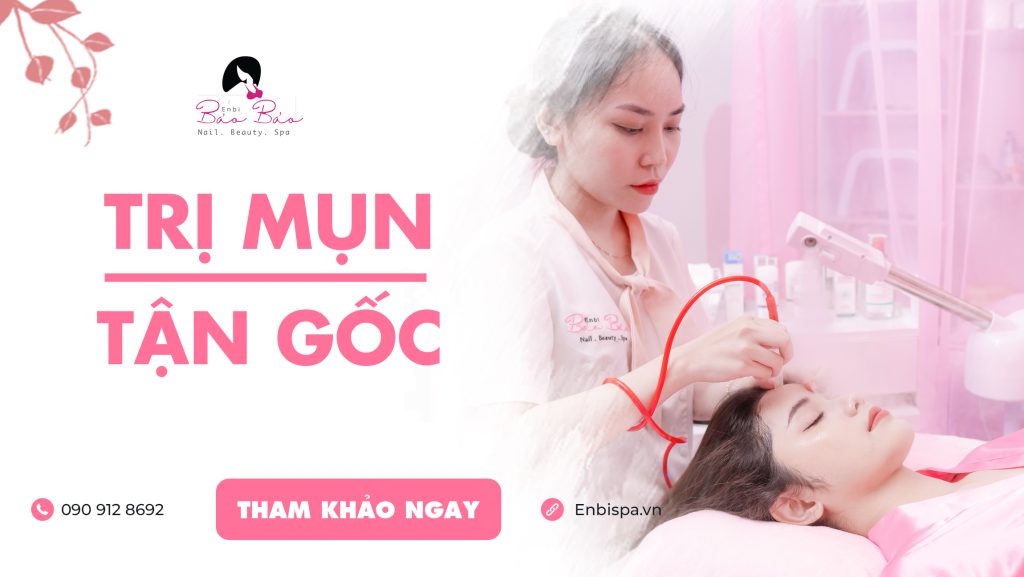
Enbi Bao Bao Nail & Spa is the ideal choice for those seeking intensive skincare and acne treatment services with high safety standards. The spa focuses on analyzing each skin problem in detail using skin analysis before treatment, thereby developing a suitable treatment plan for inflammatory acne, hidden acne, blackheads, or weakened skin due to incorrect treatment. Thanks to this scientific approach, customers always feel a noticeable improvement after each treatment session.
The acne treatment process at Enbi Bao Bao is performed professionally with meticulous steps such as deep cleansing, sebum control, proper acne extraction techniques, and restoration with specialized essences. Each step is carefully performed by experienced technicians, helping to reduce redness and swelling, minimize scarring, and reduce damage. This meticulous approach helps the skin become healthier from within, rather than just improving the surface.
A major advantage of Enbi Bao Bao Nail & Spa is its commitment to supporting customers throughout the acne treatment process, combining home care with regular follow-up to maintain long-lasting results. The spa is committed to avoiding skin abrasion or harsh treatments that could cause harm. This dedication has made Enbi Bao Bao a reputable and trusted address for specialized acne treatment in Ho Chi Minh City.
Contact information for Enbi Bao Bao Nail & Spa – A reputable place for skin care and acne treatment:
Conclusion
The article on Enbi Bao Bao Nail & Spa has answered the question “Why do I get acne?” and covered everything you need to know about acne-prone skin. We hope that this knowledge will help you apply it to your life and find a skincare routine that suits you. Don’t forget to follow us for more interesting updates!
See more:

Related Articles
Is it normal to experience body aches after a massage? Causes and effective ways to relieve pain
After a massage, many people hope their bodies will feel lighter, more relaxed, and more comfortable. However, there are also many cases where people experience mild pain or soreness lasting 1-2 days, causing many to ...
Jun
Should you shower after a massage? Experts answer from A-Z to avoid adverse effects
After a massage, many people want to shower immediately because they feel sweaty, have essential oils on their skin, or simply want to feel cleaner. However, showering right after a massage isn’t necessarily the best ...
May
What is the difference between foot massage and foot soak?
After a long day of walking, standing, or sitting continuously, feet are often the most tired but often neglected part of the body. Many people choose to soak their feet in warm water at home ...
May
What should you keep in mind when going for your first massage to have a truly relaxing experience?
Many people feel both curious and a little hesitant before their first massage, unsure of which type to choose, what to prepare, whether to change clothes, or whether the massage will truly be as relaxing ...
May
Does massage help reduce stress? A scientific perspective and little-known facts
In today’s fast-paced and stressful modern life, stress has become a daily occurrence for many. Work, studies, finances, and life’s worries leave the body and mind constantly tense and fatigued. Therefore, many people are turning ...
May
Should you get massages regularly? Benefits, appropriate frequency, and things to keep in mind
After stressful workdays, muscle aches, or prolonged insomnia, massage has become a familiar relaxation option for many. However, many people still wonder whether they should get massages regularly and how often they should get one ...
May