
 Tiếng Việt
Are acne blemishes on your face making you feel self-conscious and detracting from your natural beauty? Are you looking to understand the causes of acne and effective treatments to regain smooth, youthful skin? Let’s explore all of this with Enbi Bao Bao Nail & Spa below!
What is acne?

To find a suitable and effective acne treatment, we first need to understand what acne is. It’s a common dermatological condition related to the sebaceous glands under the skin. Pores are small openings in the skin, and hair follicles are the pathways that carry sebum from the sebaceous glands to the pores. When hair follicles become clogged due to accumulated sebum and dead skin cells, it creates conditions for bacteria to grow and form red pimples, causing inflammation.
Common types of acne
Blackheads
Blackheads are small bumps on the skin’s surface that contain excess oil and dead skin cells. Their black color doesn’t come from dirt but from the reflection of light from clogged hair follicles. Blackheads can be treated with over-the-counter medications.
Whiteheads

Whitehead acne results from clogged pores due to the buildup of excess oil, dead skin cells, and bacteria. This type of acne is usually non-inflammatory and manageable. Similar to blackheads, you can safely and effectively treat whiteheads with over-the-counter medications.
Papules
Inflamed acne, which creates small red or pink bumps on the skin, is called papular acne. This type of acne is extremely sensitive, so it’s absolutely crucial to avoid squeezing or picking at it to prevent worsening inflammation and scarring.
Pustule
Pustules are a type of inflamed acne with a whitehead in the center and a surrounding red, swollen area. These pimples usually contain white or yellow pus. To avoid further skin infection, you should not squeeze or puncture pustules.
Nodular acne
When the hair follicle ruptures at the base and pushes to the surface of the skin, a cystic acne lesion forms. Nodular acne usually appears under the skin, is large in size, and feels painful to the touch. If left untreated, nodular acne can cause significant skin damage and leave scars.
Cystic acne
Cystic acne is a severe form of acne. They appear as closed sacs containing fluid, pus, etc., and resemble large beans growing beneath the skin’s surface.
See more: Revealing the secret to treating hidden acne under the skin safely and thoroughly
Causes of acne

The cause is usually due to an increase in testosterone levels during puberty in both males and females, which stimulates the oil glands in the skin. During adolescence, these glands produce a lot of oil, making the skin oilier. However, in some people, this oil is blocked by open pores. The blocked oil forms whiteheads, while open pores, if exposed to air, create blackheads, which can then develop into cystic acne if severely inflamed.
Signs of acne
- Blackheads: Located deep within open pores, these are formed by sebum which, upon contact with air, darkens, creating black pimples.
- Whiteheads: These appear in closed pores, caused by sebum and dead skin cells blocking the pores.
- Palpitis: These consist of red, inflamed bumps.
- Nodular acne: This includes large, pus-filled pimples that form a cyst, feeling hard and painful to the touch.
- Pustules: These are pimples containing white or yellow pus, surrounded by redness.
- Cystoid acne: This type of large, pus-filled pimple is often painful due to severe inflammation of the hair follicle.
Factors that increase the risk of developing acne

- Puberty: Teenagers are very prone to acne during puberty. At this time, hormones are not yet balanced, causing the sebaceous glands to become overactive, leading to clogged pores and acne formation.
- Genetics: If both parents have acne, there is a high chance their children will also be prone to acne. This genetic cause may be related to how the sebaceous glands function and the skin structure inherited from the parents.
- Medication: The risk of developing acne may come from taking medications containing corticosteroids, androgens, or testosterone.
- Poor skin hygiene: Not removing makeup after using cosmetics, using soaps and shower gels with harsh cleansing properties, etc.
- Friction causing pressure on the skin: Wearing masks frequently, fastening helmet straps tightly, wearing backpacks, necklaces, etc., contribute to creating favorable conditions for bacteria and sebum to accumulate in pores, leading to blockage and acne formation.
Safe ways to treat acne at home
Treating mild acne at home

Mild acne mainly includes blackheads, whiteheads, along with a few papules and pustules. To treat acne effectively, you should:
- Maintain a regular skincare routine: Thoroughly remove makeup before bed, use a pH-balanced facial cleanser, and use a gentle moisturizer to avoid clogging pores and keep skin hydrated.
- Maintain a healthy diet: Avoid sugary foods, fast food, and processed foods. Ensure you drink at least 2 liters of water per day to keep your skin hydrated.
- Use acne medication: Apply spot treatment creams or gels containing ingredients such as salicylic acid or benzoyl peroxide.
Acne treatment with a dermatologist (moderate to severe cases)
Moderate acne can be treated with medications such as: antibiotics like erythromycin or clindamycin, retinoids, or benzoyl peroxide, which help remove dead skin cells and promote better skin regeneration.
If acne is severe, you need to consult a dermatologist for proper advice and treatment. Typically, a dermatologist will recommend a combination of one or more methods, such as: oral antibiotics, benzoyl peroxide, topical antibiotics, or topical retinoids.
How to care for your skin and prevent acne

Here are some ways to care for your skin and prevent acne during puberty that you should know:
- Wash your face at a moderate frequency, avoiding using soap or facial cleanser more than twice a day, as this can disrupt the skin’s pH balance.
- Do not rub the skin in areas with acne to avoid creating conditions for bacterial infection and increasing the risk of redness, inflammation, and skin damage.
- Avoid touching your face unnecessarily to minimize the transfer of bacteria from your hands to your skin.
- Keep your phone away from your face when talking, and avoid touching your face (unnecessarily) to prevent the spread of bacteria to your skin.
- Wash your hands frequently, especially before applying cream, exfoliants, and makeup.
- Wear loose, breathable clothing; avoid tight-fitting clothes if you have a lot of acne on your back, shoulders, or chest.
- Build a healthy lifestyle: Avoid stress and anxiety, get enough sleep, and eat plenty of green vegetables and fruits.
See more: Instructions on how to properly care for your face every day
Questions related to acne treatment

Should you squeeze acne?
The best advice is to let acne heal and don’t squeeze it!
However, in some necessary cases, you can squeeze acne when you see the whitehead. Before squeezing, wash your hands thoroughly and apply a warm compress to the pimple. Next, use a cotton swab to gently squeeze both sides of the pimple. After squeezing, apply an acne treatment product containing salicylic acid and avoid touching the area for at least 12 hours.
Can acne go away on its own?
Acne can clear up on its own, but the duration of acne varies depending on the skin condition. For severe cases, it’s best to consult a dermatologist for safe and effective treatment.
Can dry skin get acne?
The answer is yes! Although dry skin lacks natural oils, dead skin cells, dirt, and makeup that accumulate on the skin’s surface over time can clog pores and lead to acne.
What is the difference between the two active ingredients Salicylic Acid and Benzoyl Peroxide?
- Salicylic acid: Helps keep pores clear, reduces acne-causing bacteria, and decreases inflammation.
- Benzoyl peroxide: Helps reduce swelling and inflammation, inhibits the growth of acne-causing bacteria, and reduces the number of new pimples that form.
See more: Some things to know about acne prevention and treatment
Where is a reputable place to treat acne in Ho Chi Minh City?
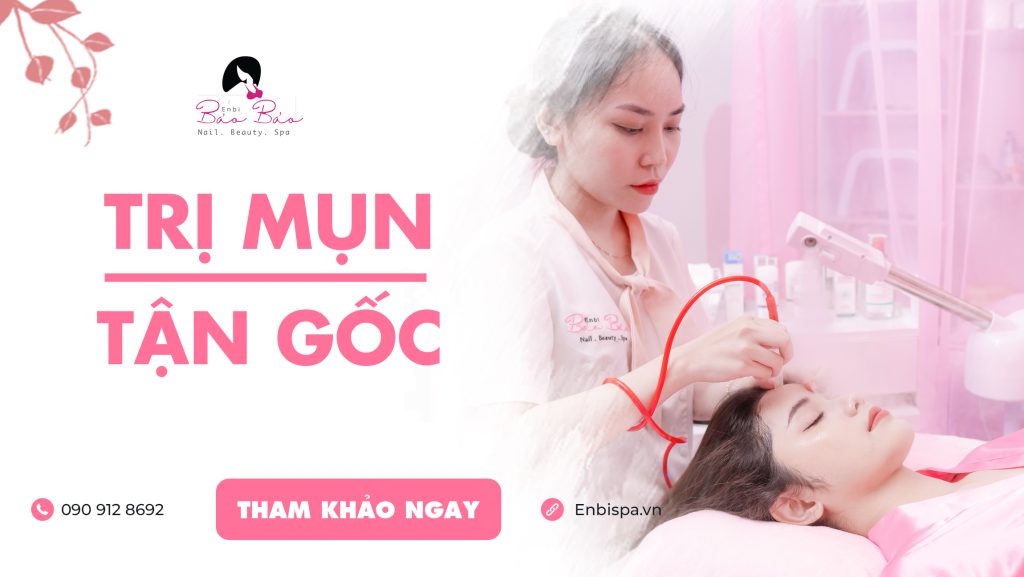
Acne is making you lose confidence in front of others? Is your acne getting worse despite applying many acne creams/serums without improvement? Then let the skincare services at Enbi Bao Bao Nail & Spa help you get rid of that burden starting today!
Enbi Bao Bao Nail & Spa is one of the reputable and highly-rated skincare spas for acne treatment in Go Vap District, Ho Chi Minh City. With a team of experienced professionals and advanced modern technologies, Enbi Bao Bao is committed to providing you with effective and safe treatments for your skin.
- Consultation and skin examination are provided.
- All products are tested and gentle on all acne-prone skin types.
- Noticeable results after 1-2 treatments.
- Helps eliminate up to 99% of acne after the treatment (including stubborn acne).
- No pain during treatment and no acne recurrence.
- Modern and advanced beauty technology.
- Adherence to standard medical procedures and the use of modern beauty technology, ensuring no skin irritation.
- Post-treatment skin monitoring and guidance.
Contact information for Enbi Bao Bao Nail & Spa – A reputable skincare and acne treatment center:
Conclusion
Above is an article about “What is Acne? Causes and Effective Treatments” that we wanted to share with our readers. We hope that the knowledge shared in this article will help you achieve smooth, youthful skin and regain your confidence. Become the best version of yourself starting today with Enbi Bao Bao Nail & Spa!
See more:

Related Articles
Is it normal to experience body aches after a massage? Causes and effective ways to relieve pain
After a massage, many people hope their bodies will feel lighter, more relaxed, and more comfortable. However, there are also many cases where people experience mild pain or soreness lasting 1-2 days, causing many to ...
Jun
Should you shower after a massage? Experts answer from A-Z to avoid adverse effects
After a massage, many people want to shower immediately because they feel sweaty, have essential oils on their skin, or simply want to feel cleaner. However, showering right after a massage isn’t necessarily the best ...
May
What is the difference between foot massage and foot soak?
After a long day of walking, standing, or sitting continuously, feet are often the most tired but often neglected part of the body. Many people choose to soak their feet in warm water at home ...
May
What should you keep in mind when going for your first massage to have a truly relaxing experience?
Many people feel both curious and a little hesitant before their first massage, unsure of which type to choose, what to prepare, whether to change clothes, or whether the massage will truly be as relaxing ...
May
Does massage help reduce stress? A scientific perspective and little-known facts
In today’s fast-paced and stressful modern life, stress has become a daily occurrence for many. Work, studies, finances, and life’s worries leave the body and mind constantly tense and fatigued. Therefore, many people are turning ...
May
Should you get massages regularly? Benefits, appropriate frequency, and things to keep in mind
After stressful workdays, muscle aches, or prolonged insomnia, massage has become a familiar relaxation option for many. However, many people still wonder whether they should get massages regularly and how often they should get one ...
May